
Certification Standards Mapping Roulette Software Distribution Across Borders
Certification standards establish the technical and regulatory benchmarks that roulette software must meet before operators can release applications into regional markets, and these benchmarks directly shape which distribution channels remain open at any given time. Bodies such as the Malta Gaming Authority and the New Jersey Division of Gaming Enforcement require independent testing of random number generators along with security audits that confirm data encryption meets specified thresholds, while similar frameworks operate in Canada through iGaming Ontario and in parts of Australia under state-level oversight. As of August 2026, updated guidelines from several jurisdictions now include mandatory penetration testing cycles every six months, a change that has lengthened approval timelines yet also reduced the number of uncertified builds appearing in secondary app repositories.
Regulatory Layers and Their Technical Requirements
Each certification body maintains a distinct checklist that covers game fairness, server integrity, and player fund segregation, and software providers adjust their codebases to satisfy the strictest rules first because those approvals often satisfy secondary markets through mutual recognition agreements. Observers note that when a studio secures approval from the Isle of Man Gambling Supervision Commission, distribution into several European Economic Area countries becomes faster because local regulators accept the existing audit reports rather than demanding fresh reviews. The process typically involves submission of source code, compilation of test results from accredited laboratories, and ongoing monitoring clauses that require real-time reporting of any detected anomalies in wheel outcomes or bet settlement logic.
Distribution Network Effects
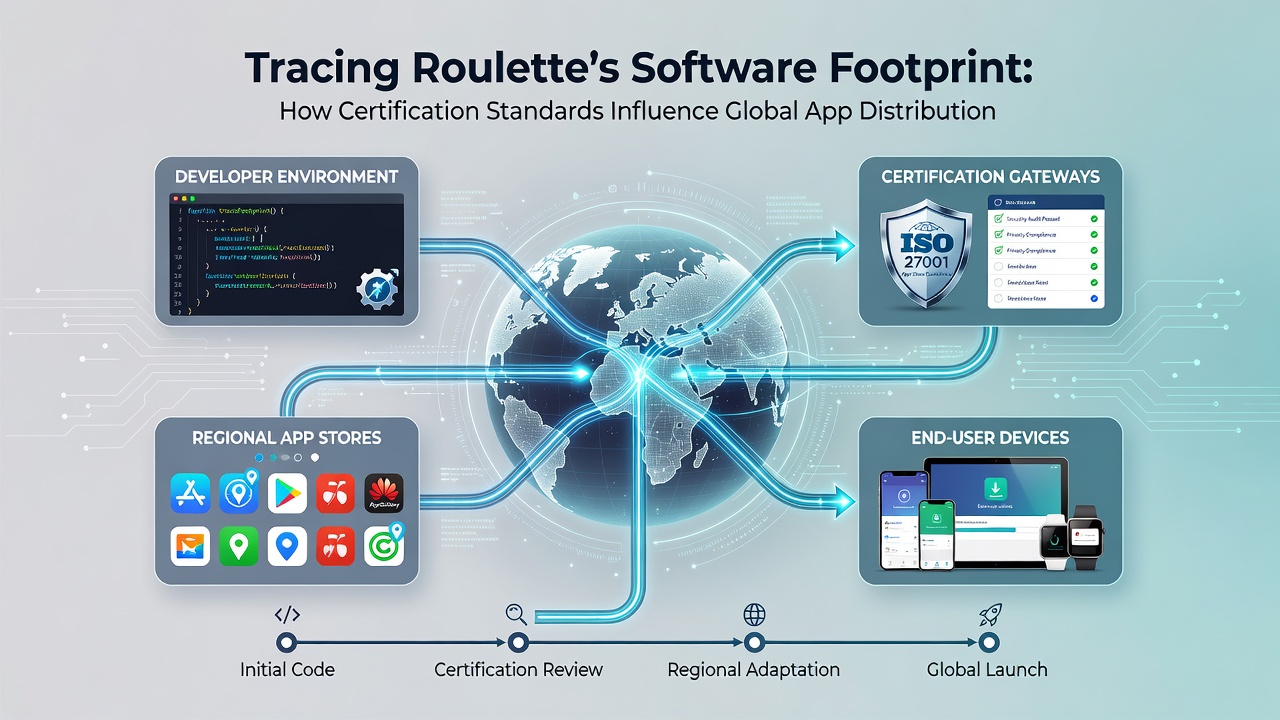
App stores and payment processors apply their own gatekeeping rules that align with these certification layers, so an application lacking visible seals from recognized authorities faces immediate removal or blocked downloads in multiple territories. Data from industry reports indicate that certified roulette platforms experience wider placement in mainstream mobile ecosystems, whereas uncertified alternatives remain confined to direct website access or regional third-party stores that operate under lighter scrutiny. This filtering mechanism creates measurable differences in user acquisition costs, with operators reporting lower marketing spend per install when certification documentation satisfies both regulatory and platform requirements simultaneously.
Regional Variations in Approval Pathways
North American markets impose additional geofencing and responsible gambling integration tests that extend the certification window beyond what European authorities typically require, and these extra steps influence release schedules for cross-border operators who must maintain separate builds for different jurisdictions. In contrast, certain Asian markets accept certifications issued by Curacao authorities as sufficient for initial launch, although subsequent local reviews may still apply once revenue thresholds are crossed. Researchers tracking these patterns have documented cases where a single software update passed testing in one region yet triggered re-certification in another because the update altered the seed generation method used by the roulette engine, demonstrating how small technical changes propagate through distribution networks.
Supply Chain and Partnership Implications
Software vendors often structure licensing agreements around certification status, granting broader territorial rights only after a product clears multiple regulatory hurdles, and this practice steers partnership decisions among operators who seek rapid expansion. Payment gateways similarly reference certification databases when deciding whether to enable transactions for a given application, creating an additional layer of control that reinforces the influence of the original regulatory approvals. Those who have examined distribution logs observe that applications carrying current seals from at least two major authorities appear in 30 to 40 percent more storefronts than those holding only a single certification, a difference that compounds over successive release cycles.
Conclusion
Certification standards therefore function as both gatekeepers and enablers within global roulette software networks, determining which applications reach which users while also setting the technical floor for security and fairness across markets. Continued alignment between testing laboratories, regulatory bodies, and distribution platforms will likely determine how quickly new roulette variants and live dealer integrations can scale internationally in the months ahead.