
Cryptographic Protocols Upholding Roulette Integrity in Decentralized Networks
Decentralized gaming platforms rely on cryptographic protocols to maintain roulette outcome fairness without centralized oversight, and these systems combine hash functions, zero-knowledge proofs, and verifiable random functions to generate and verify results across distributed nodes. Researchers at various institutions have documented how commitment schemes allow operators and players to lock in random seeds before each spin, which prevents retroactive manipulation once the wheel sequence begins. Data from multiple network analyses show that such methods reduce disputes by anchoring every outcome to publicly auditable records on the ledger.
Core Mechanisms Behind Provably Fair Roulette
Provably fair systems start with a server seed that remains hidden until after the round concludes, while players contribute client seeds that combine through cryptographic hashing to produce the final random value. This process uses algorithms like HMAC-SHA256 to create an output that maps directly to roulette positions, and observers note that anyone can recompute the result independently once the server seed reveals itself. In July 2026 several platforms expanded adoption of these techniques following updates to open-source libraries that simplified verification for non-technical users.
Verifiable random functions add another layer by allowing nodes to confirm randomness without exposing underlying inputs, and studies from academic groups indicate these functions integrate cleanly with smart contracts that execute the betting logic. Participants receive a proof attached to each spin result, which they can check against the published parameters to confirm no deviation occurred during generation.
Integration With Distributed Ledger Technologies
Blockchain networks store the cryptographic commitments and proofs in immutable blocks, enabling continuous auditing by any connected participant. Transactions that record bets and outcomes carry digital signatures that tie each action to specific addresses, while consensus rules prevent any single party from rewriting history. Industry reports highlight that this structure supports cross-border play because verification happens locally on each user's device rather than through a central authority.
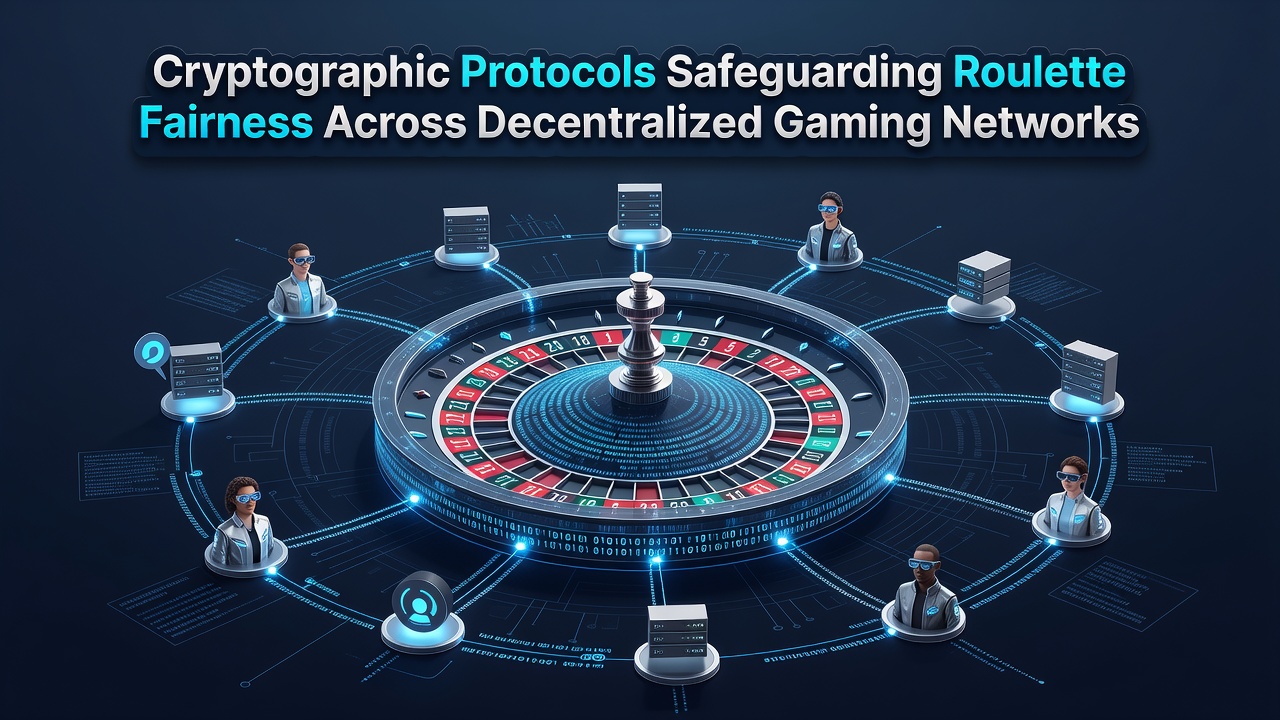
Smart contracts enforce payout rules automatically once the random result validates against the committed seeds, and this automation removes manual intervention that could introduce bias. European research consortia have examined how these contracts handle edge cases such as network forks, finding that fallback mechanisms preserve fairness by reverting to the last confirmed state. Meanwhile, Canadian regulatory filings describe similar approaches in pilot programs that test decentralized roulette under existing gaming statutes.
Security Considerations and Audit Practices
Regular third-party audits examine the cryptographic implementations for side-channel vulnerabilities and ensure random number generation meets statistical standards required by gaming oversight bodies. NIST publications on random bit generation provide reference frameworks that many projects adopt, and auditors cross-reference source code against these guidelines before certifying a platform. Players often examine public audit reports that list any identified issues along with remediation steps taken by the development teams.
Quantum-resistant algorithms appear in newer protocol versions because future computing advances could threaten current elliptic curve signatures, and developers have begun testing lattice-based alternatives within test networks. Figures released by research institutions tracking adoption rates show gradual migration toward these stronger primitives across multiple decentralized gaming projects.
Conclusion
Cryptographic protocols continue to evolve as decentralized roulette networks expand, and the combination of commitment schemes, verifiable randomness, and ledger immutability creates transparent verification paths that operate independently of any single operator. Continued collaboration between academic researchers, standards organizations, and platform developers supports ongoing improvements that keep outcomes consistent and verifiable across global participant bases.