
Global Synchronization in Live Roulette: Managing Dealer Networks Across Multiple Time Zones
Operators of live roulette platforms face ongoing demands when aligning dealer shifts across continents where time differences span 12 hours or more, and data from the Malta Gaming Authority indicates that cross-border networks expanded their operational windows by 18 percent between 2024 and 2026 to meet continuous player demand. These networks rely on coordinated handoffs that keep tables active while dealers in one region end their sessions and colleagues in another begin, which requires precise scheduling software and redundant communication systems to prevent any interruption in the broadcast feed.
Core Mechanisms Behind Cross-Continental Dealer Coordination
Companies maintain central control rooms that monitor every table feed in real time, and they use automated rota systems to assign dealers according to local labor regulations while ensuring coverage during peak hours in major markets such as Europe, Asia, and the Americas. When a studio in Manila prepares to close for the night, another facility in Bucharest takes over the same game instance without resetting the wheel or reshuffling the deck, which preserves game continuity and player bankrolls across the transition. Observers note that latency buffers built into streaming protocols allow these switches to occur within milliseconds, and the process depends on standardized data protocols that transmit bet information and wheel outcomes simultaneously to all connected regions.
Regulatory and Infrastructure Considerations in August 2026
By August 2026 several jurisdictions had updated their licensing frameworks to require documented contingency plans for time-zone handoffs, and figures from the New Jersey Division of Gaming Enforcement reveal that operators submitting such plans experienced a 22 percent faster approval cycle for multi-studio expansions. Infrastructure investments include backup power supplies at each site, encrypted fiber links between continents, and cloud-based monitoring dashboards that display dealer availability in every active time zone. These measures address potential disruptions from natural events or regional power fluctuations that could otherwise leave tables without staff during high-traffic periods.
Technology Supporting Seamless Handovers
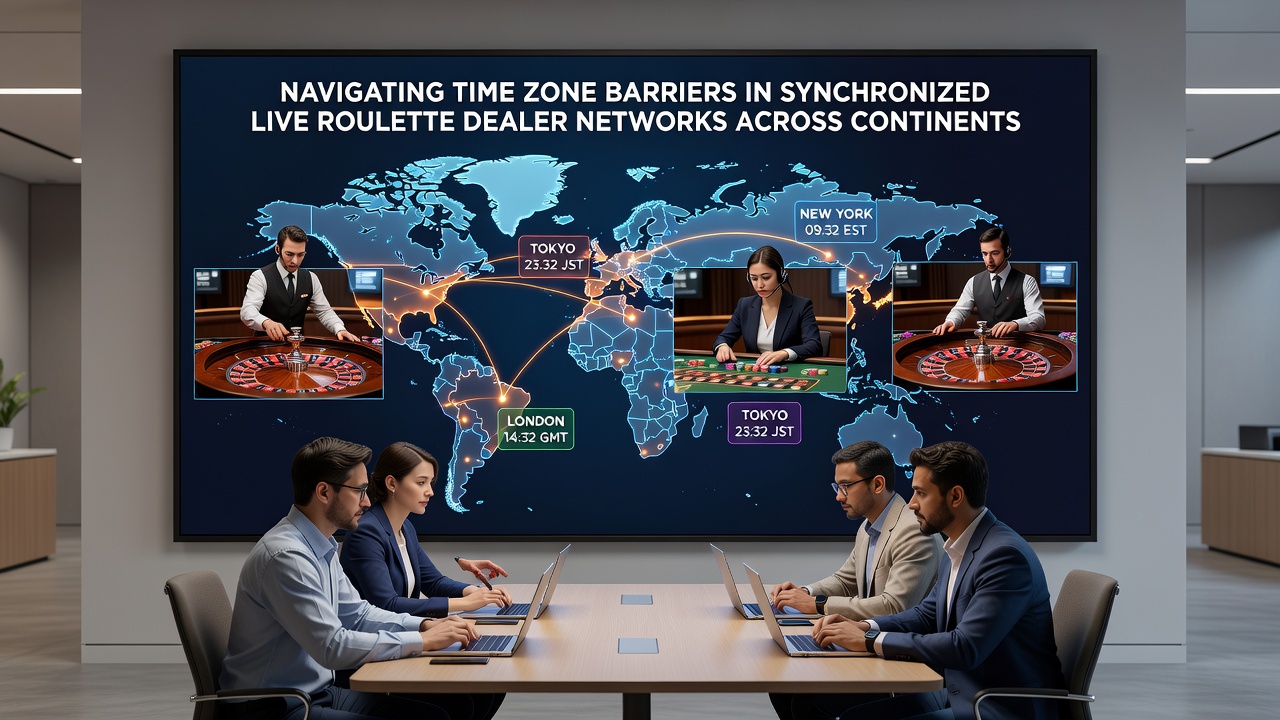
Software platforms integrate shift calendars with player traffic analytics so that staffing levels rise automatically when European evening play overlaps with Asian morning sessions, and the same systems flag any gaps that would require temporary dealer reallocation. Research from the Gaming Standards Association shows that networks adopting these integrated calendars reduced unplanned table closures by 31 percent over a 12-month period ending in mid-2026. Voice-over-IP channels and shared chat interfaces allow supervisors in different locations to confirm readiness before each handover, while biometric verification systems ensure that only authorized personnel access the dealer terminals at each site.
Case Examples of Operational Models
One European operator maintains three primary hubs spaced roughly eight hours apart, allowing each location to cover an eight-hour dealer shift while overlapping with the next hub for 30 minutes to complete all administrative checks. Another network based in Southeast Asia coordinates with secondary studios in South Africa and Central America, and this arrangement permits continuous 24-hour operation without extending any single dealer beyond local working-hour limits. Both models depend on shared databases that record every spin result and player action, which ensures regulatory audit trails remain intact regardless of which continent hosts the active dealer at any given moment.
Future Developments in Global Network Resilience
Industry reports project further adoption of AI-assisted scheduling tools that predict player volume surges across time zones and pre-emptively adjust dealer rosters weeks in advance, and these tools draw on anonymized historical data sets to refine their forecasts. Additional satellite uplink options are under evaluation to supplement terrestrial connections in regions prone to fiber cuts, which would add another layer of redundancy to the existing handoff protocols. As regulatory bodies in multiple continents continue to align their reporting standards, operators expect clearer guidelines on how cross-border time-zone management should be documented and audited.
Conclusion
Live roulette networks achieve continuous global coverage through layered scheduling systems, standardized data protocols, and regulatory-compliant infrastructure that together neutralize the barriers created by differing time zones. The practices documented across multiple jurisdictions demonstrate that precise coordination between studios remains both technically feasible and legally manageable when supported by current monitoring technology and forward-looking licensing requirements.