
How Influencer-Driven Streams Are Transforming Roulette Learning Curves in New Player Cohorts
Data from multiple gaming markets shows that influencer-led streaming platforms have accelerated how new player groups acquire roulette knowledge since the mid-2020s. Live broadcasts on services such as Twitch and YouTube combine visual demonstrations with immediate audience feedback, creating shorter pathways from first exposure to active participation compared with traditional tutorials or static guides. In June 2026, industry tracking services recorded sustained growth in roulette-specific stream hours across North American and European time zones, correlating with higher engagement metrics among viewers aged 21 to 35 who had not previously placed real-money bets.
Stream Formats and Instructional Methods
Content creators structure sessions around live wheel spins while narrating bet placement, payout calculations, and probability outcomes in sequence. Viewers observe bankroll management decisions unfold in real time, then replicate those choices in free-play environments before transitioning to regulated sites. Chat overlays allow participants to submit questions that hosts address between spins, turning passive viewing into iterative learning loops. European operators report that cohorts introduced through these streams demonstrate faster comprehension of inside versus outside bet distinctions than groups relying solely on in-app help sections.
Regional Data Patterns Through Mid-2026
Figures released by the European Gaming and Betting Association indicate that roulette stream viewership in the EU grew 28 percent year-over-year through the first half of 2026, with the largest increases occurring in markets where operators integrate direct links from popular channels. In Australia, state-level regulatory summaries note parallel rises in demo-mode sessions initiated after exposure to influencer content, particularly among users in New South Wales and Victoria. Canadian provincial data from Ontario similarly tracks elevated first-deposit conversion rates for players who cite streaming platforms as their initial information source.
One documented case involves a Canadian creator whose weekly roulette broadcasts reached 180,000 concurrent viewers by April 2026. Session analytics revealed that 62 percent of chat participants accessed linked practice tables within 48 hours of watching, while 34 percent completed at least one real-money round on licensed platforms within seven days. Similar patterns appear in reports from the Malta Gaming Authority, where cross-border traffic from influencer referrals showed elevated retention after the first week of play.
Platform Algorithms and Cohort Reach
Recommendation engines on major streaming services prioritize roulette content based on watch-time duration and chat activity, pushing these broadcasts toward users who have previously searched terms such as “wheel odds” or “bet progression.” This algorithmic matching concentrates new-player exposure within defined demographic clusters. Observers tracking platform data note that short-form clips excerpted from longer streams often serve as entry points, directing traffic back to full-length sessions where complete rule explanations occur. As a result, learning curves compress because repeated exposure to the same concepts arrives through multiple formats rather than isolated study sessions.
Integration With Regulated Operator Tools
Several licensed platforms now embed referral codes within live streams, allowing viewers to transition directly from observation to funded accounts while preserving responsible-gaming prompts. These integrations include time-stamped bet histories that match on-screen actions, giving new users verifiable records they can review afterward. Data shared by the Australian Communications and Media Authority shows that such linked sessions correlate wth higher completion rates of mandatory deposit-limit tutorials before first wagers are placed. In parallel, Ontario’s iGaming regulator records indicate that players arriving via influencer channels complete age-verification steps at rates comparable to those entering through direct website visits.
Measurement of Learning Acceleration
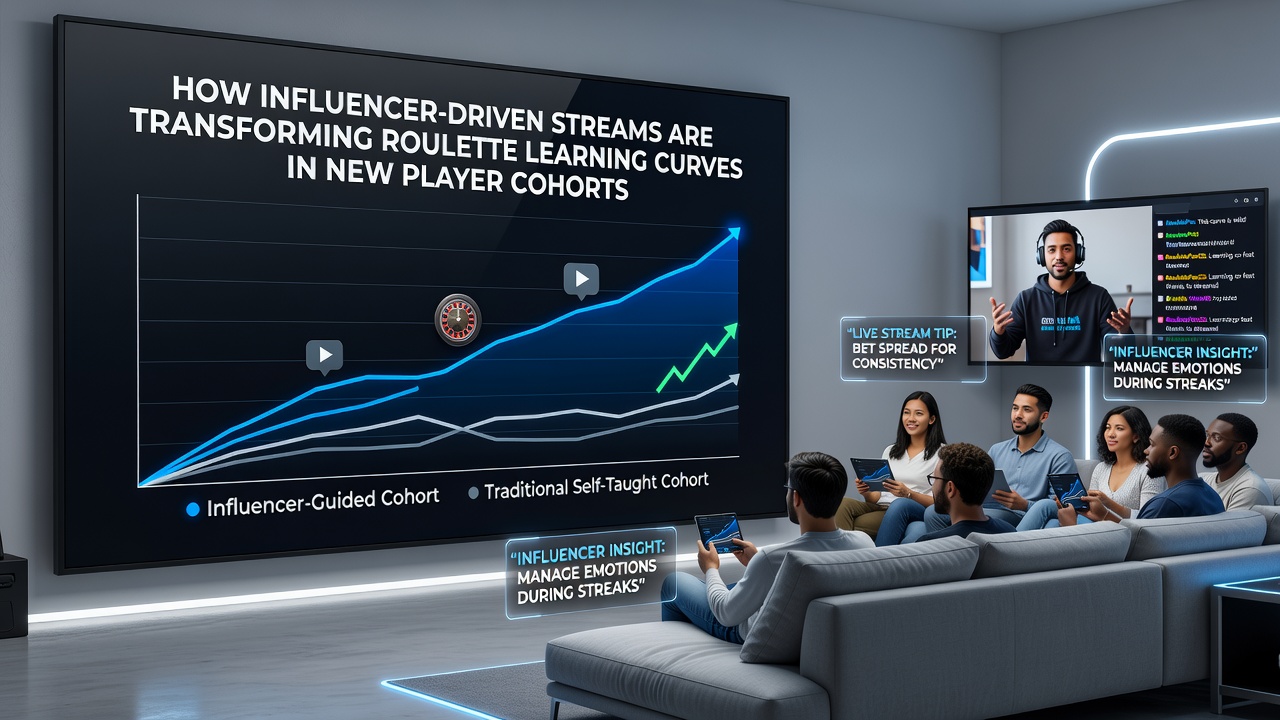
Academic and industry studies conducted through 2025 and into 2026 quantify reduced time-to-first-bet among stream-exposed cohorts. One joint project between a European university research group and a gaming analytics firm found that participants who watched at least three full roulette streams required 40 percent fewer practice rounds to reach consistent understanding of house-edge mechanics than control groups using written materials alone. Retention metrics further indicate that these cohorts maintain steady session lengths over subsequent weeks, suggesting the visual and interactive format supports sustained skill application rather than one-time novelty.
Conclusion
Tracking through June 2026 demonstrates that influencer-driven roulette streams have altered entry pathways for successive waves of new players by supplying continuous, observable instruction paired with immediate application opportunities. Regulatory bodies across multiple jurisdictions continue to monitor these patterns, while operators adjust onboarding sequences to accommodate viewers who arrive already familiar with core mechanics. The measurable compression of learning intervals remains tied to the volume and consistency of live content rather than isolated promotional efforts.