
Regulatory Evolution in Emerging Digital Economies Reshapes Wheel Game Software Adaptability Across Devices
Regulatory frameworks in emerging digital markets continue to evolve rapidly, and these changes directly influence how wheel game software maintains functionality across smartphones, tablets, and desktop systems. Governments in regions such as Southeast Asia, Latin America, and parts of Africa have introduced updated compliance standards that address data localization, device certification, and cross-platform verification protocols. These measures require developers to adjust codebases so that wheel game applications meet varying technical specifications without losing core performance features.
Key Regulatory Developments Across Regions
Authorities in Brazil updated digital gaming guidelines in early 2026, requiring all online gaming platforms to incorporate region-specific encryption layers that function consistently on both Android and iOS operating systems. Similar adjustments appeared in Singapore and Malaysia, where licensing bodies now mandate that wheel game software undergo separate compatibility audits for each major device category before market entry. Data compiled by regional gaming associations shows that these audits have extended development timelines by an average of four to six weeks per title.
European Union directives on digital market access, accessible through the official portal at digital-markets-act.ec.europa.eu, have also influenced portability standards for software distributed in affiliated emerging economies. These rules emphasize interoperability requirements that prevent platform lock-in, forcing wheel game providers to maintain parallel versions optimized for different hardware profiles. Observers note that companies adapting early have sustained broader distribution networks compared with those reacting later to the updates.
Technical Adjustments for Cross-Device Functionality
Software portability demands have grown more stringent because regulators now require real-time synchronization of game outcomes and user data across devices. Wheel game engines must therefore support seamless session transfers without compromising randomness certification or fairness algorithms. Developers have responded by adopting modular architecture designs that isolate regulatory compliance components from core gameplay logic, allowing quicker updates when new device standards emerge.
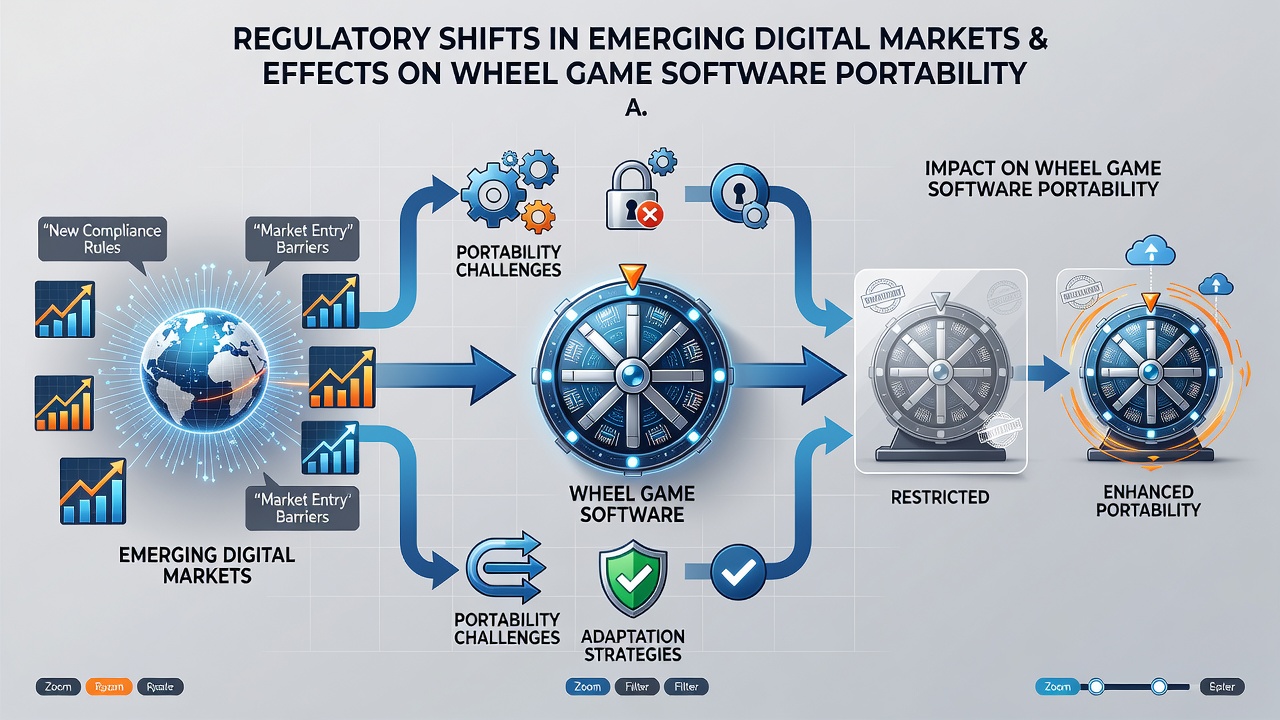
Research from academic institutions tracking gaming technology indicates that markets enforcing strict device certification see higher rates of standardized application programming interfaces. These interfaces reduce fragmentation between mobile and desktop versions, yet they also increase upfront engineering costs. In July 2026, several Latin American jurisdictions plan to align their certification processes with ISO technical standards, which could further streamline portability once implemented across borders.
Impact on Market Distribution and Player Access
Distribution patterns have shifted as operators prioritize platforms that already satisfy multiple regulatory environments. Wheel game software that achieves certification in one emerging market often gains faster approval in others when it demonstrates proven cross-device reliability. Industry reports compiled by international trade groups reveal that titles with robust portability features retain users at higher rates during regional regulatory transitions, since players can continue sessions on whichever device meets local access rules at any given moment.
Additional requirements around age verification and transaction monitoring have prompted integration of device-specific sensors and secure elements. These additions affect how wheel game interfaces render on older hardware versus newer models, yet they also create opportunities for providers who master unified compliance layers. Government agencies in Australia and Canada have published guidance documents that emerging markets frequently reference when drafting their own portability mandates.
Future Outlook for Software Developers
Developers continue to monitor upcoming policy announcements from bodies such as the Australian Communications and Media Authority, whose regulatory updates at acma.gov.au frequently set precedents for neighboring markets. As more jurisdictions adopt device-agnostic compliance frameworks, wheel game software will likely converge toward unified codebases that reduce maintenance overhead while meeting diverse regional expectations.
Conclusion
Regulatory shifts in emerging digital markets have established new benchmarks for wheel game software portability, compelling developers to prioritize modular designs and multi-device certification. Data from multiple authorities demonstrates measurable effects on development cycles and distribution reach, while coordinated standards emerging in July 2026 may further harmonize requirements across regions. These changes continue to shape how wheel game applications operate across the expanding range of consumer devices.