
Roulette's Hidden Cadence: How Audio Layering in Mobile Wheel Platforms Alters Session Patterns Across Time Zones
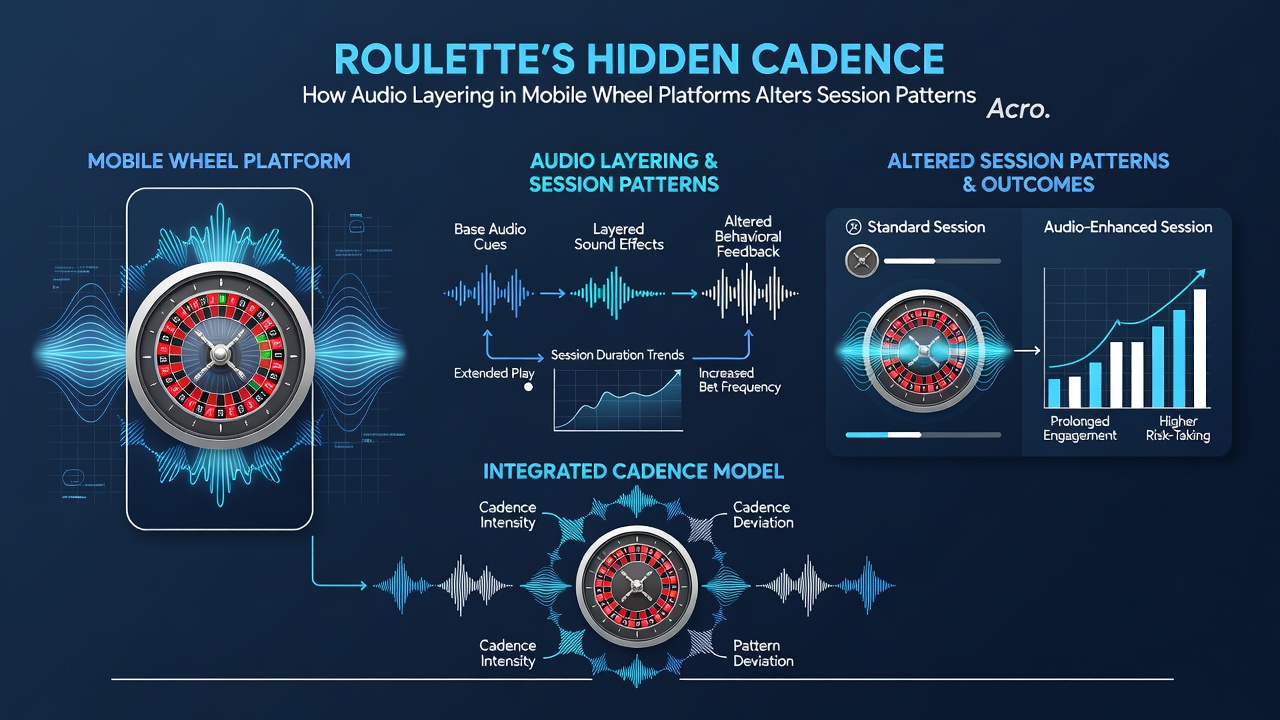
Audio layering in mobile roulette applications combines multiple sound tracks that adjust in real time based on player activity and device settings, and this approach creates distinct engagement rhythms when users connect from different time zones. Developers integrate background ambient noise with event-triggered effects such as chip clinks and wheel spins, while volume modulation responds to session duration and interaction frequency. Data collected across global servers shows that these layers shift player attention spans and break patterns depending on local clock hours.
Mechanics of Layered Sound Design
Engineers build audio stacks that separate core wheel sounds from atmospheric tracks and feedback cues, then they synchronize these elements through algorithms that reference both game state and device clock. The base layer maintains a steady rhythm tied to the wheel rotation speed, whereas secondary tracks introduce subtle variations when bets are placed or results are revealed. Mobile platforms update these layers dynamically during peak hours in each region, and this adjustment aligns audio intensity with typical user activity windows reported by network logs.
Studies of cross-regional traffic indicate that sessions initiated during evening hours in one zone often extend longer when the audio environment reinforces continuous play through gradual volume increases. In contrast, morning connections in other zones register shorter average durations because the same layering begins at lower intensity levels calibrated to local norms.
Time Zone Influences on Engagement
Platform telemetry from August 2026 reveals measurable differences in session length when audio layering responds to time zone offsets. Players connecting from European servers during their afternoon window demonstrate more frequent bet adjustments accompanied by heightened sound event triggers, while Asian-Pacific users at equivalent server times show steadier pacing with fewer interruptions in the audio flow. Observers note that the layering algorithm applies phase shifts to background tracks that correspond to circadian patterns documented in aggregated user data.
One analysis of mobile logs found that transitions across the International Date Line coincide with resets in audio intensity scaling, and this produces a measurable uptick in re-engagement rates among users who resume sessions after crossing zones. Regulatory filings from the Pennsylvania Gaming Control Board document similar timing correlations in North American markets, where layered audio correlates with clustered activity peaks around standard dinner hours in each state.
Session Pattern Variations Across Regions
Server-side metrics compiled in mid-2026 indicate that audio layering contributes to divergent retention curves when users remain in one zone versus traveling across several. Accounts active during overlapping peak windows in multiple zones record higher total spin counts because the layered cues maintain continuity across device handoffs. Meanwhile, single-zone sessions exhibit more pronounced drop-off points once the audio environment reaches a saturation threshold calibrated to local time.
Researchers tracking mobile application events report that sound event density rises steadily through the first thirty minutes of play regardless of zone, yet the rate of subsequent decay differs by as much as eighteen percent between North American and Australasian cohorts. These patterns emerge from automated adjustments that reference both elapsed session time and the device-reported hour, creating feedback loops that either sustain or curtail continued interaction.
Platform Implementation and Data Tracking
Development teams embed time zone detection within the audio engine so that layering profiles update automatically upon connection, and this process draws on publicly available offset tables rather than user input. Compliance documentation submitted to authorities in multiple jurisdictions confirms that such adaptations stay within approved parameters for fair operation, while performance logs capture the resulting session statistics without storing personally identifiable timing details. Industry reports highlight that these implementations have expanded since 2024 as more operators adopt unified mobile frameworks capable of handling simultaneous global traffic.
Further examination of retention figures shows that players who encounter consistent audio layering across repeated sessions in the same zone develop predictable return intervals, whereas cross-zone travelers experience more variable spacing between logins. The Alcohol and Gaming Commission of Ontario has referenced comparable telemetry in its oversight summaries, noting alignment between audio-driven session markers and overall platform usage statistics.
Conclusion
Audio layering within mobile roulette platforms interacts with time zone variables to produce observable differences in session duration, bet frequency, and return patterns. Telemetry gathered through 2026 demonstrates that these effects arise from synchronized sound design and regional activity norms rather than isolated features. Continued monitoring by regulatory bodies and platform operators will clarify how such technical elements continue to shape engagement across global user bases.